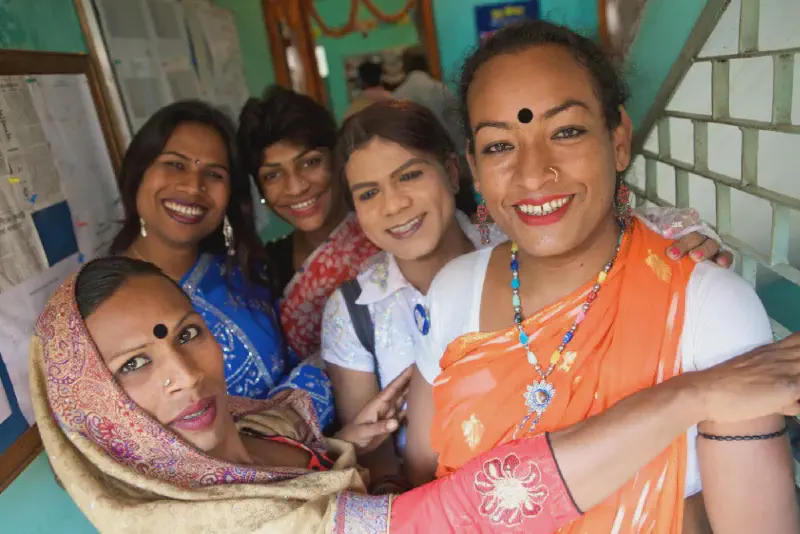
Not all exclusions are intentional.
Some happen because we assume we’ve already included everyone.
An old story from the Ramayana reminds us why assumptions can be the most dangerous blind spot of all.
On the banks of the Sarayu, where water meets devotion, an ancient story unfolds—one absent from gilded manuscripts yet alive in whispered memory. It speaks not of conquest or glory, but of those who wait in the margins, and of a prince who learned to truly see.
The Forgotten Blessing
When Rama stood at the river’s edge, bound for fourteen years of exile, all of Ayodhya wept behind him. The prince raised his hands in farewell.
“My brothers and sisters,” he said, “return home. I shall come back to you.”
The crowds dispersed. Men returned to their homes. Women wiped their tears and turned away.
But at the riverbank, some remained.
The hijras—neither brother nor sister in Rama’s parting words—understood they had not been released. Unaddressed, unacknowledged, they stayed. Not in anger, but in the purest form of devotion: literal, unwavering, absolute.
Fourteen Years of Stillness
Seasons turned. Monsoons came and went. The Sarayu rose and fell.
They did not move.
While Rama wandered forests, while Sita was stolen, while armies clashed and demons fell, the hijras kept their vigil. No food touched their lips. No shelter covered their heads. Their hair grew long and grey, their nails black and curved, their clothes reduced to threads.
They had not been told to leave. So they waited.
The Return
When Rama’s ferry touched the same shore fourteen years later, he found them—skeletal, aged beyond time, yet eyes still bright with loyalty.
“Why?” he asked, voice breaking. “Why are you here?”
“You addressed the men. You addressed the women,” they replied simply. “You did not address us. We waited for your word.”
The Blessing That Became a Legacy
In that moment, shame and wonder flooded the prince who would be king. He had spoken carelessly. They had listened completely.
Rama stepped forward and embraced them—these devotees who had proven love beyond the boundaries of gender, beyond the limits of endurance, beyond the logic of survival.
“O faithful ones of Ayodhya,” he said, his blessing now deliberate, inclusive, eternal, “may your lineage flourish forever in this land of Bharata. You alone shall carry the power of auspicious blessing at life’s most sacred moments—at births, at weddings, at new beginnings. And your words shall never fail.”
The Living Tradition
To this day, when a child is born or lovers wed, the hijra community arrives to offer badhai—blessings that carry the weight of that ancient vigil, that divine recognition, that moment when a god-prince learned that devotion has no gender, and inclusion cannot be assumed but must be spoken.
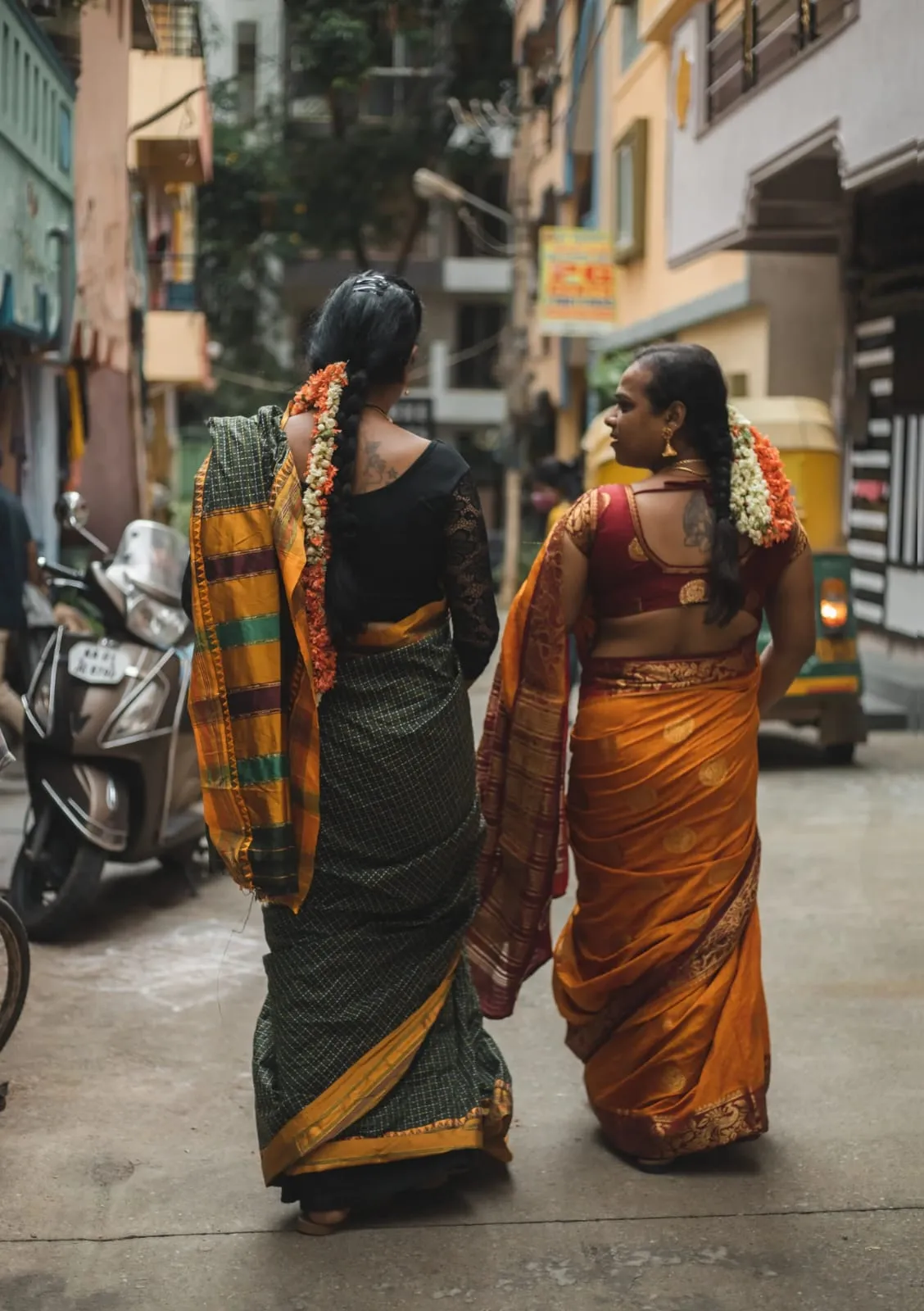 This is India’s genius: not in what is written in stone, but in what is remembered by the river. Not in who is centered in the grand narrative, but in who waited at its edges and was finally, truly, seen.
The Sarayu still flows. The blessings still echo. And the story reminds us that the most profound spiritual truth is often the simplest: everyone must be called by name.
Lessons from the Riverbank
- Rama’s humility True leadership is the willingness to recognise one’s blind spots—and to correct them openly.
- The need to recognise identity Inclusion is not passive. Those unseen remain unheard unless they are explicitly acknowledged.
- Clarity in communication without assumptions Words matter. What is left unsaid can shape destinies as powerfully as what is spoken.
🙏 Namaste
If this story stayed with you, consider supporting its journey by joining us on Patreon and helping keep these forgotten legends alive