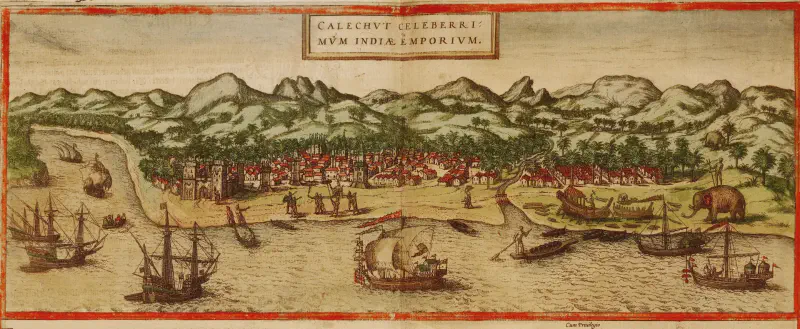
Goa has always been close to my heart for many reasons. The vibe there is different. I have been there as a very young man just after college on an adventure. That was when Goa was the hippie capital of the world, and we had a memorable trip when Goa was truly laid back and relaxed. Over the years I went back many times, and each time was a fresh experience, a fresh insight. This time was a reunion of old friends from my school days. But I spent some time alone a few days exploring Goa and its history rather than sit on the beach soaking in the sun. So how did Goa become a prominent part of the Portuguese Empire…here is the story in short.
The Fall of Goa
Wars are rarely fought for the reasons stated. Kings and generals speak of God and glory, but they move their armies for gold and grain.
A World of Competing Powers
Goa in the early 1500s was a prize worth fighting over. Its ports breathed life into the spice trade. Horses from Persia arrived here before they carried warriors into battle across the Deccan. A horse was not merely a weapon of war — it was a symbol of prestige, of power, of legitimacy. Whoever controlled the horse trade controlled the sinews of empire.
The Bahmani Sultanate had wrested Goa from the Vijayanagara Empire in 1496. When Goa changed hands, Vijayanagara lost its primary gateway for importing Persian horses. This was not a small wound. It bled into every campaign, every court, every calculation the empire made. Goa in enemy hands was a strategic catastrophe. The Hindus of Goa, meanwhile, chafed under the new rulers. Discontent simmered quietly beneath the surface of daily life.
The Shape of Eastern Trade
Far beyond the Deccan, the world’s wealth moved on water. The Indian Ocean and the Arabian Sea carried the most valuable trade of the age — spices from the southern states of India, silks, precious stones, goods that European courts craved and could not produce themselves. But this trade did not flow freely. It passed through three chokepoints, each one controlled by a Muslim power: the port of Aden held by the Arabs, Hormuz by the Persians, and Malacca by Muslim Malays.
On India’s western coast, the Zamorin of Calicut presided over the most important port in the subcontinent. Calicut was a free port, the beating heart of the spice trade, and the Arabs had been its faithful partners for centuries. They had intermarried with local families, built mosques, and embedded themselves into the rhythms of Malabar life. They were not foreigners; they were neighbours. The Zamorin valued this relationship and protected it.
Further north, the Sultanate of Gujarat controlled another significant stretch of the western coast. Beyond India’s borders, the Ottoman Empire cast its long shadow over Europe from Turkey, while the Safavid Empire rose swiftly in Persia. The world was reshaping itself, and trade was the sinew connecting every ambition.
Portugal’s Three Stated Aims
Portugal was not a large country, but it was a hungry one. Its state policy rested on three declared pillars: To combat Islam around the world. To encourage the spread of Christianity. To secure the spice trade by building a Portuguese Asian Empire.
The first two were sermons for the Church in Rome and the common people at home. Every empire needs its emotional rallying cry, because no man will march into cannon fire for someone else’s profit. Religion is among the most powerful of such cries, and Portugal wielded it expertly. The real hunger, however, was the third — to break the Muslim monopoly over eastern trade and claim that wealth for Lisbon.
What was dressed as a crusade was, at its heart, a commercial war.
The Battle for the Sea Lanes
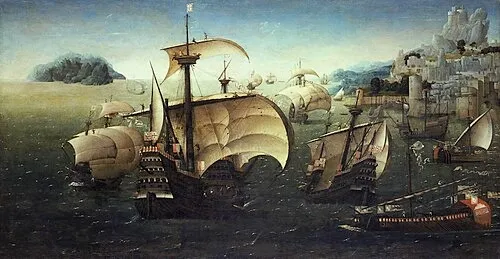
Between 1500 and 1509, the Indian Ocean became a theatre of relentless naval war.
On one side stood Portugal. On the other stood a remarkable coalition — the fleet of the Zamorin of Calicut, the Sultan of Gujarat, the Mamelukes of Egypt, and, in a twist that says everything about the nature of commerce, the Christian merchant guilds of Venice. The Venetians were the middlemen of Europe’s spice trade, and the Portuguese, by seeking direct access to Indian ports, threatened to make them irrelevant. Faith yielded, as it so often does, to the balance sheet.
Portugal had a complicated and increasingly hostile relationship with the Zamorin. The Portuguese demanded that Arab traders be expelled from Calicut. The Arabs, with equal determination, pressed the Zamorin to keep the Portuguese out. The Zamorin was caught between two powerful and impatient forces, each unwilling to share the port they both wanted.
The Portuguese had hoped for support from the ancient Christian communities of Kerala, communities that had embraced Christianity long before it had spread across Europe, following a far older tradition. But these Christians owed their loyalty to the land they lived in, not to the Pope in Rome, who held no relevance for them. That support never came.
Instead, Portugal found allies elsewhere. The Raja of Cochin, a vassal of the Zamorin who wished to break free of that subordination, welcomed them. The rulers of Kannur extended support. And the Vijayanagara Empire, smarting from the loss of Goa and bound by common enmity with the Deccan Sultanates, allied with the Portuguese on more than one occasion.
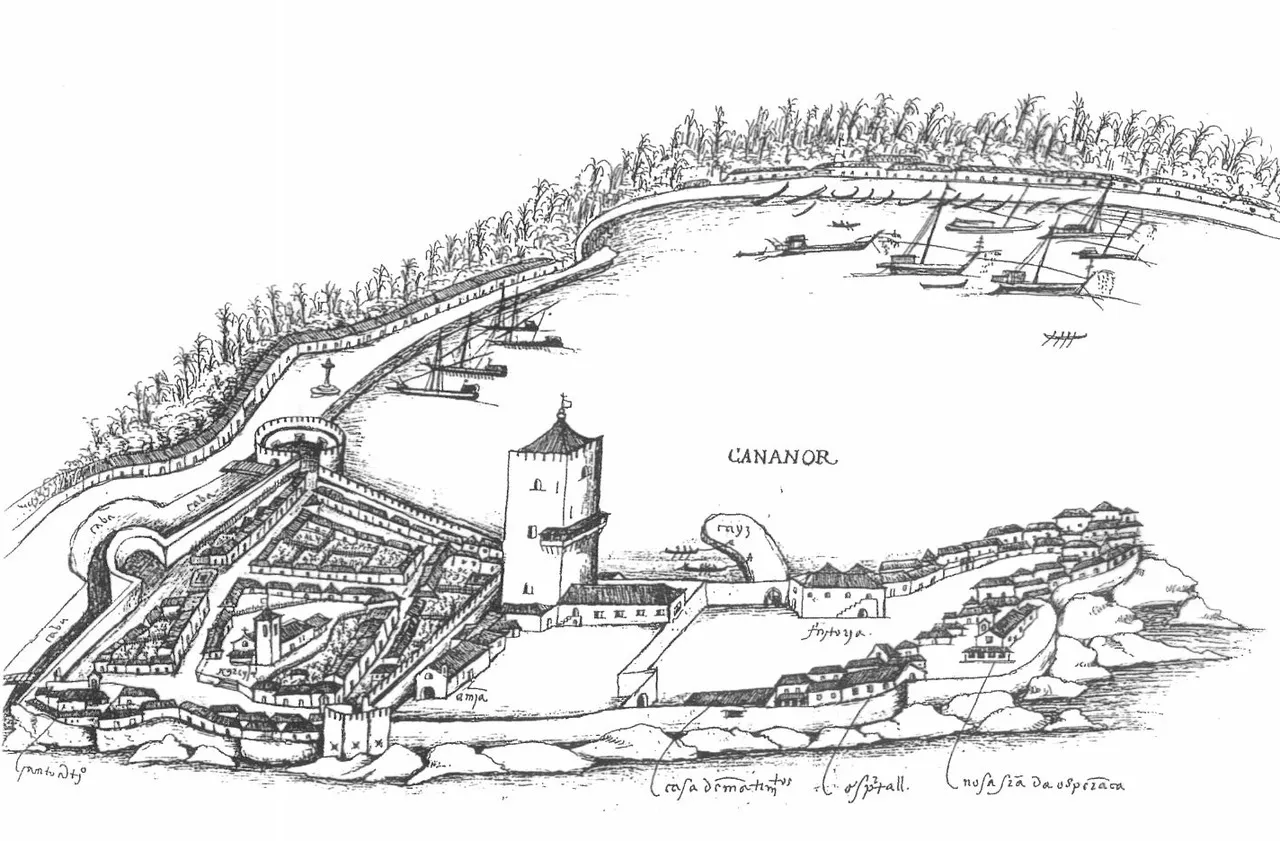
The Portuguese built forts at Cochin, Kannur, and on the island of Anjediva off the Karnataka coast, slowly constructing the architecture of a presence on Indian soil.
Alfonso de Albuquerque
Alfonso de Albuquerque, appointed Governor-General of Portuguese holdings in India and later the first Duke of Goa, was the man Portugal sent to change the map of the world.
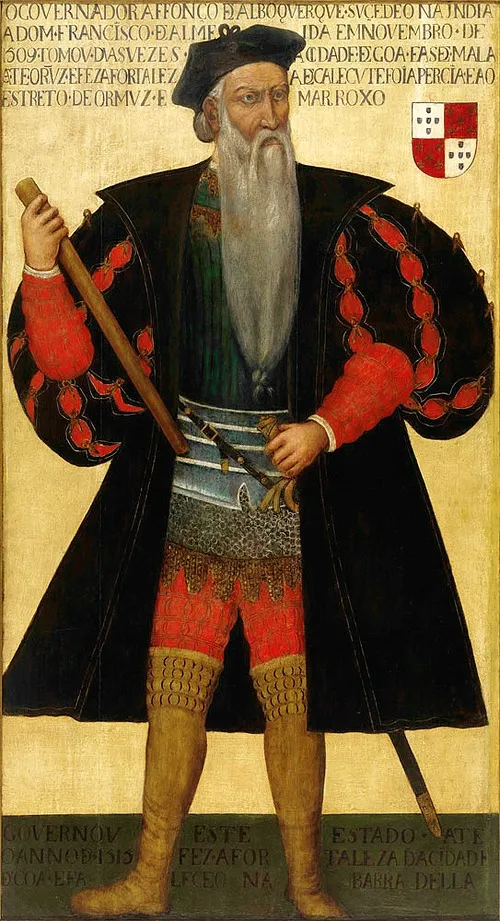
He was a brilliant naval commander who won battle after battle and laid the foundation for Portugal to become the first nation to build a truly worldwide empire. But he thought beyond battles. He understood that to break Muslim control over the far eastern trade; he needed to capture the three great chokepoints: Aden, Hormuz, and Malacca. And to do any of that, he needed a strong, sovereign base in India.
Cochin was an ally’s port, not his own. It was also too small for the scale of his ambitions. Calicut, the prize he truly wanted, had resisted every attempt he made. In January 1510, after yet another failed assault on Calicut, Alfonso stepped back and considered his options.
News arrived that the Mamelukes were assembling a large fleet at Suez to challenge the Portuguese. He gathered his forces and sailed from Cochin, intending to meet this threat in the Red Sea.
The Warlord at Honnavar
At the port of Honnavar on the Karnataka coast, a man came aboard who would redirect the course of history.
Timoji — also known as Thimayya — was the kind of man empires are built on. A powerful warlord with deep connections to the Vijayanagara Empire, he possessed sources of intelligence that the Portuguese could only envy. He was resourceful, well-informed, and he arrived at exactly the right moment.
Goa had not been part of Alfonso’s thinking. He was bound for the Red Sea. Timoji changed that.
He brought urgent news. The Sultan of Bijapur, Yusuf Adil Khan, had recently died, leaving his young and inexperienced heir Ismail Adil Khan in charge. But before his death, Yusuf had been quietly rebuilding — gathering the remnants of the Mameluke fleet destroyed by the Portuguese at Diu, constructing new ships, planning a counterattack. Goa was the site of all this regrouping. And right now, Goa was poorly defended.
The Hindus of Goa, unhappy since Vijayanagara had lost the city to the Deccan Sultanate, were ready to welcome a change. Timoji himself would bring two thousand men to the Portuguese cause.
To sail away now, Timoji argued, leaving an enemy rebuilding strength at your back — that would be foolishness.
Alfonso listened. He turned his fleet toward Goa.
The Fall
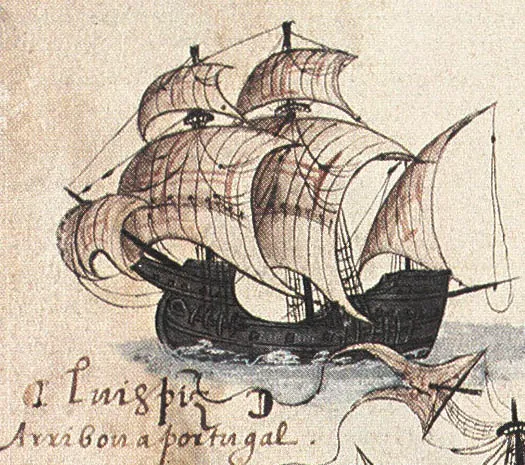
The Portuguese sailed up the Mandovi River and landed near Panjim. A band of four hundred soldiers, led by a Turkish mercenary, came out to meet them. The battle was brief and unequal. The men of Bijapur fell back into the city.
What followed surprised everyone who expected conquest to mean carnage.
Alfonso met the leading figures of Goan society and made them an offer they could not refuse: religious freedom and lower taxes. The envoys of the Goan people, seeing what had been offered, declared their full support. Goa fell to Portugal in February 1510 with little resistance and almost no bloodshed.
Alfonso then issued orders that drew a clear line between his rule and what the people of Goa had endured before. There was to be no sacking, no looting. The penalty for disobedience was death. Separate tax collectors and magistrates were appointed for Hindus and Muslims, with each community governed by its own laws and customs.
It was a beginning more benevolent than what the British would offer India centuries later, and it served Portugal well. When Bijapur and other powers made repeated attempts in the years ahead to recapture Goa, they found a population that had little motivation to help them succeed.
An Accidental Capital
Goa had not been in the plan. It was not the port Alfonso had set out to find. Yet it became the headquarters of the Portuguese Empire in the East — its most cherished possession, the jewel of a maritime empire that stretched across three oceans.
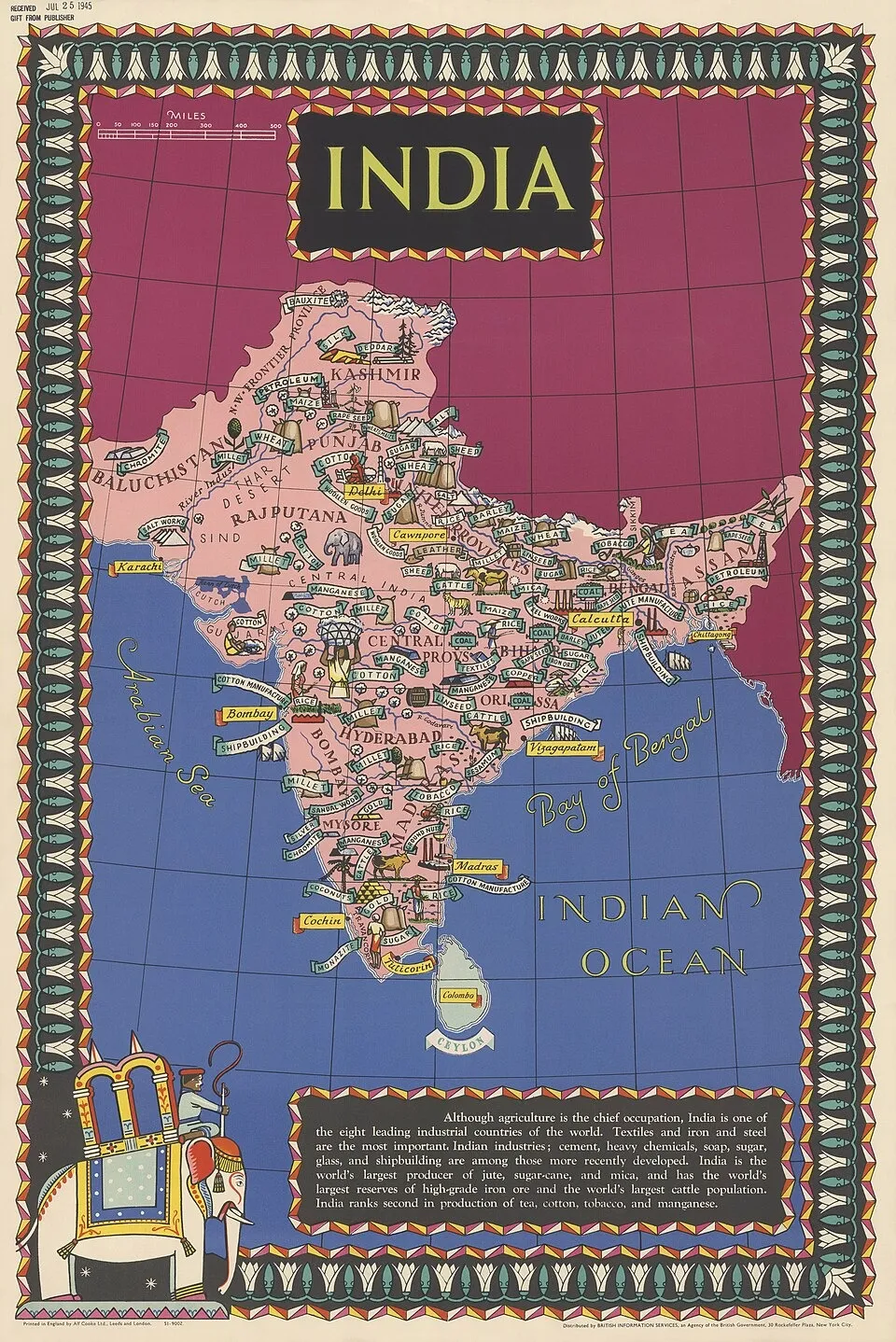
Portugal held it for nearly five centuries. Long after every other colonial power had lowered its flag and sailed home, Portugal remained. It took the Indian Army, finally, in 1961 to reclaim what had always been Indian soil.
But on that February morning in 1510, all of that was still unwritten. A warlord’s timely warning, a general’s flexible ambition, a city’s quiet discontent — and a port that nobody had planned to take became the capital of an empire nobody had planned to build.
🙏 Namaste